Tools · 7 min read
Survival knife and multitool: what to carry and what it must do
Fixed blade or folder, steel choice, and why a multitool's pliers solve more real emergency problems than any blade.
Updated 20 August 2026
Key takeaways
- A full-tang fixed blade of 10-13 cm handles heavy work; a folder is for everyday carry.
- Stainless resists rust with less maintenance — the right choice for a kit that sits unused.
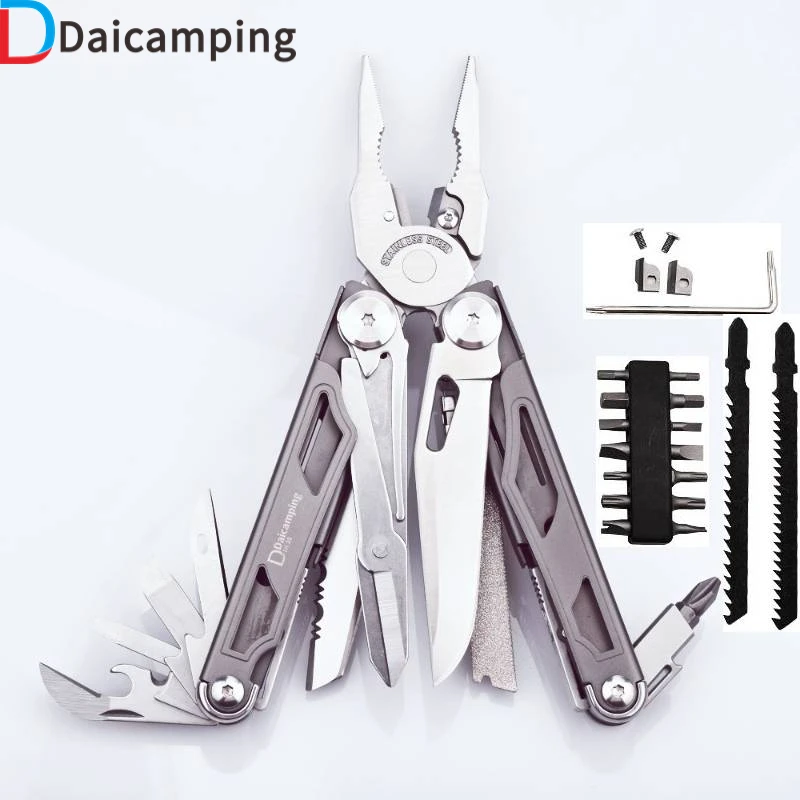
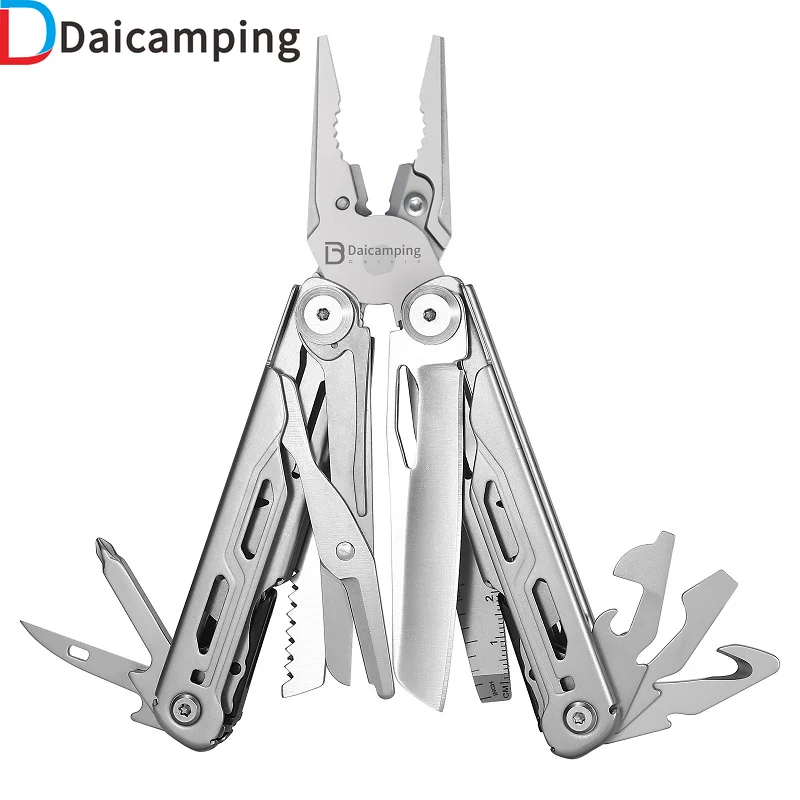
- A multitool's pliers, screwdriver and wire cutters solve more household emergencies than a knife.
- Check local knife laws before carrying anything outside your home.
What each tool is genuinely for
In an emergency the knife tasks are mundane: opening packaging, cutting cordage, preparing food, making tinder shavings, cutting away clothing. A modest blade does all of that. Batoning firewood and prying are where a full-tang fixed blade earns its extra size and weight.
The multitool covers a different set of problems entirely — turning off a valve, gripping a hot pot, cutting wire, tightening a screw on a stove or a pushchair. In a household emergency it gets used more often than the knife.
- Fixed blade: heavy cutting, splitting, reliability with no moving parts
- Folder: everyday tasks, pocketable, needs a solid lock
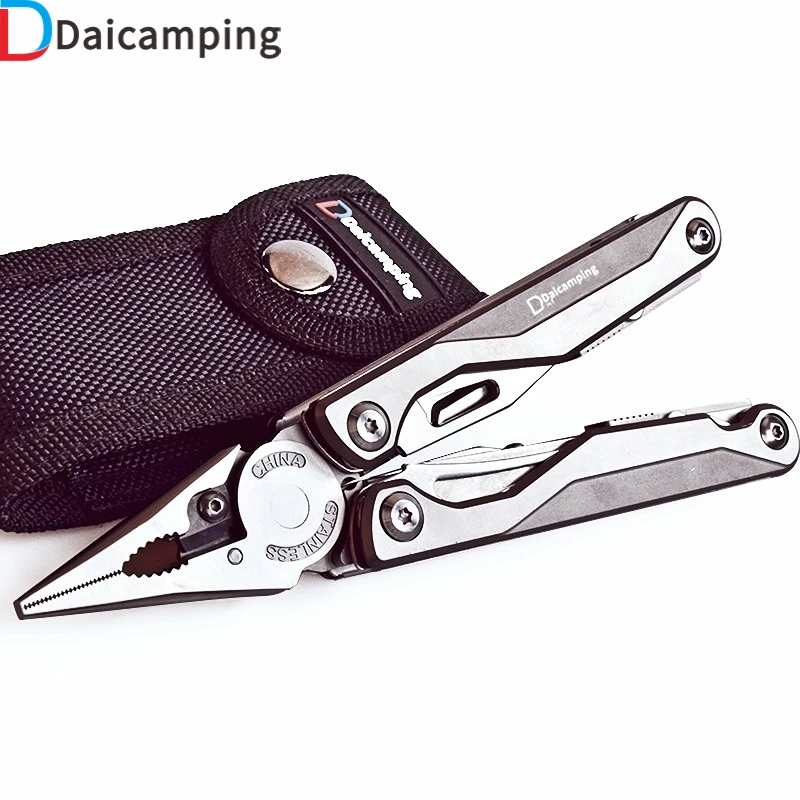
- Multitool: pliers, cutters, drivers — repairs and improvisation
- Small sharpener: a dull tool is dangerous, not just slow
Steel, handle and maintenance
Carbon steel takes a keen edge and is easy to sharpen, but it rusts if you look at it wrong. For a kit that spends months in a bag or a car, stainless is the pragmatic choice — modern stainless steels hold an edge well enough for every task above.
Handle grip in the wet matters more than the steel spec. Textured rubber or micarta stays controllable with cold, wet hands; polished wood does not. Keep a compact sharpener with the tool and touch up the edge when you rotate the kit.
The survival scenario: making a damaged home safe
After a storm there is a broken fence panel across a path, a leaking pipe, and a window to board over. What resolves those is pliers, a driver, a saw and a strong blade — plus tape, cordage and a few screws stored alongside.
That is the honest use case for tools in most European emergencies: repair and make-safe work around the home, not bushcraft. Build the tool kit around that and it will earn its place long before any disaster.
Frequently asked questions
What size survival knife is best?
A full-tang fixed blade of 10-13 cm handles almost every task. Longer blades gain little for emergency use and are harder to control for fine work.
Is a multitool enough on its own?
For household emergencies, often yes. Add a fixed blade if you expect outdoor work such as processing firewood or building shelter.
Carbon steel or stainless for a survival knife?
Stainless for kit that sits unused in a bag or car. Carbon steel sharpens more easily but needs regular oiling to avoid rust.
Tools gear in stock
Dispatched from EU warehouse, delivered in 5-8 days.
Shop all tools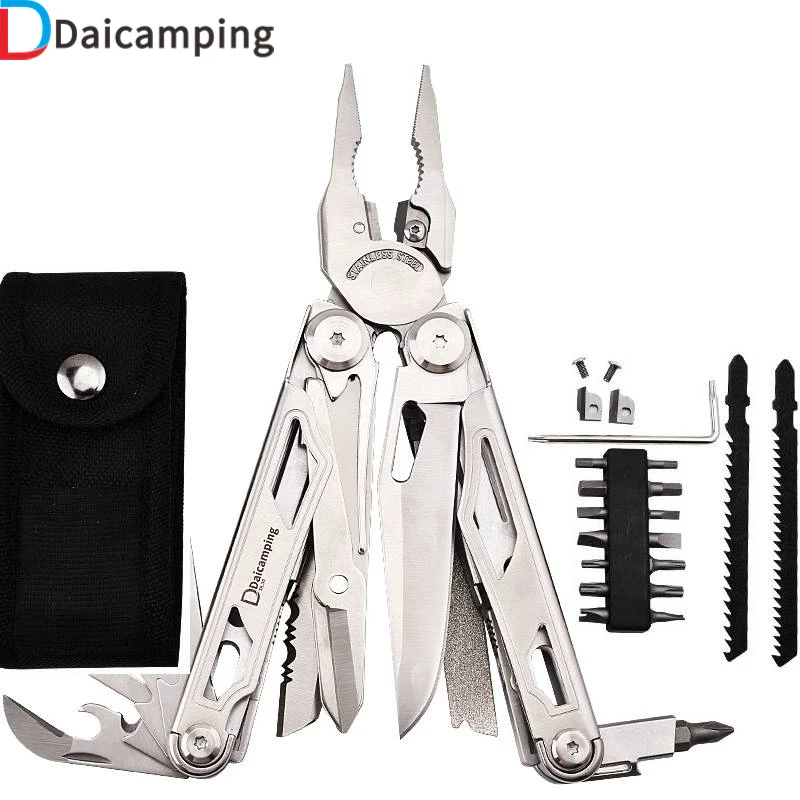
Ready-made kits for this
Prefer not to shop item by item? These kits already cover the gear in this guide, built from EU stock and priced by budget.
- House · ReadyHouse readyOutage, storm or water cut for several daysView kit
- House · CompleteHouse completeThe full household setupView kit
- On the go · ReadyGo-bag ready72-hour evacuation bagView kit